Subduction zone intitiation (SZI) occurs in diverse settings, under diverse forcing, and throughout geologic times. – Understanding it is challenging, and natural examples are rare.
Big questions
How can we observe subduction zone initiation?
It is difficult to observe SZI directly in part due to the long, Million year timescales involved. However, past SZI events can be inferred from the combination of both direct evidence in the geologic record and interpretations performed on geophysical measurements.
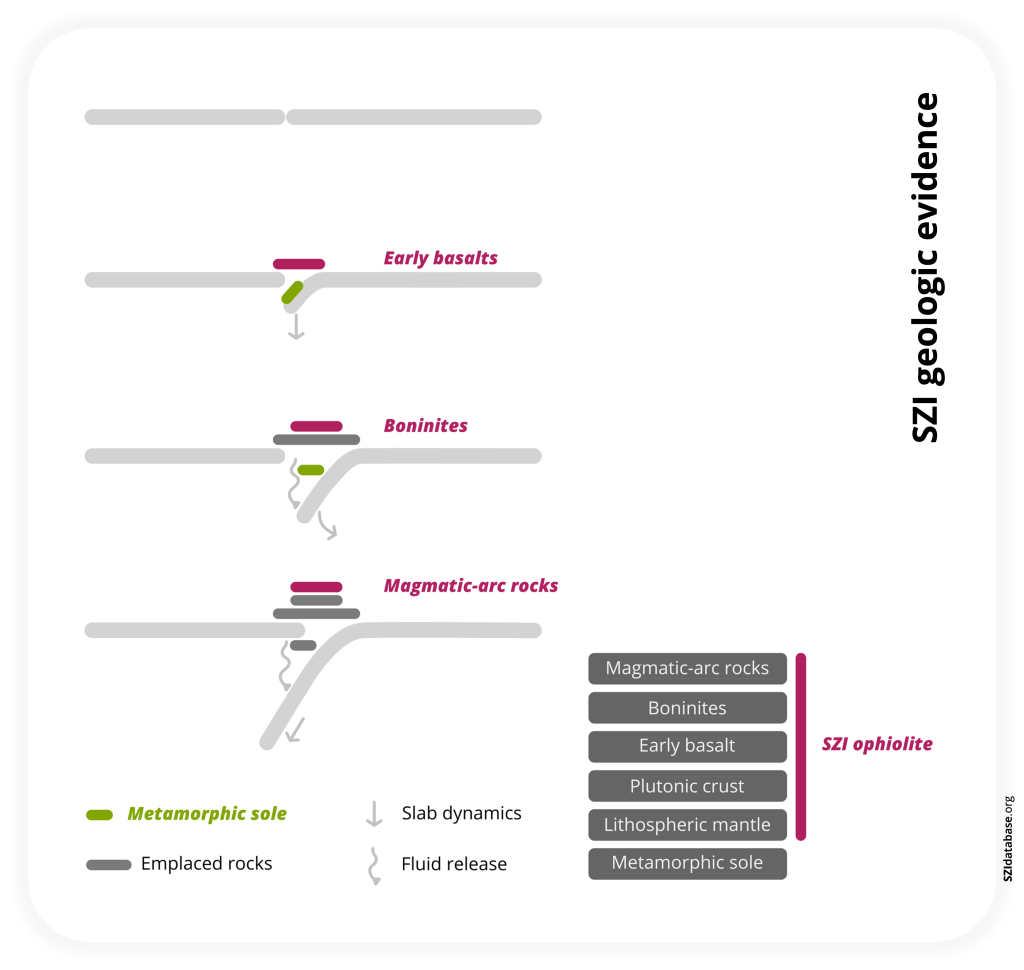
SZI-ophiolites (or their individual rock sequences) and Metamorphic soles provide direct evidence for juvenile subduction of an oceanic plate. When at least some of these rock sequences are deposited on the more long-living portions of the Earth’s surface (e.g., continents), they can provide a key record of past SZI.
Combining such direct evidence with interpretations made through plate reconstruction, seismic tomography and geodynamic forward models, allows us to infer SZI, how and when it happened, within an acceptable amount of uncertainty.
Schematic illustration of the emplacement of SZI-typical rocks during SZI, and a typical SZI ophiolite sequence. Note that this is a text-book example (according to e.g., the Izu-Bonin-Mariana SZI) and that pre-existing structures (e.g., a pre-existing volcanic arc) or variable SZI dynamics (e.g., horizontal compression) could inhibit various stages and therefore their typical rock signatures. Figure from Crameri et al. (2020, Nature Communications) and available in various formats from s-ink.org/subduction-zone-initiation-geologic-evidence.When did new subduction zones initiate on the Earth?
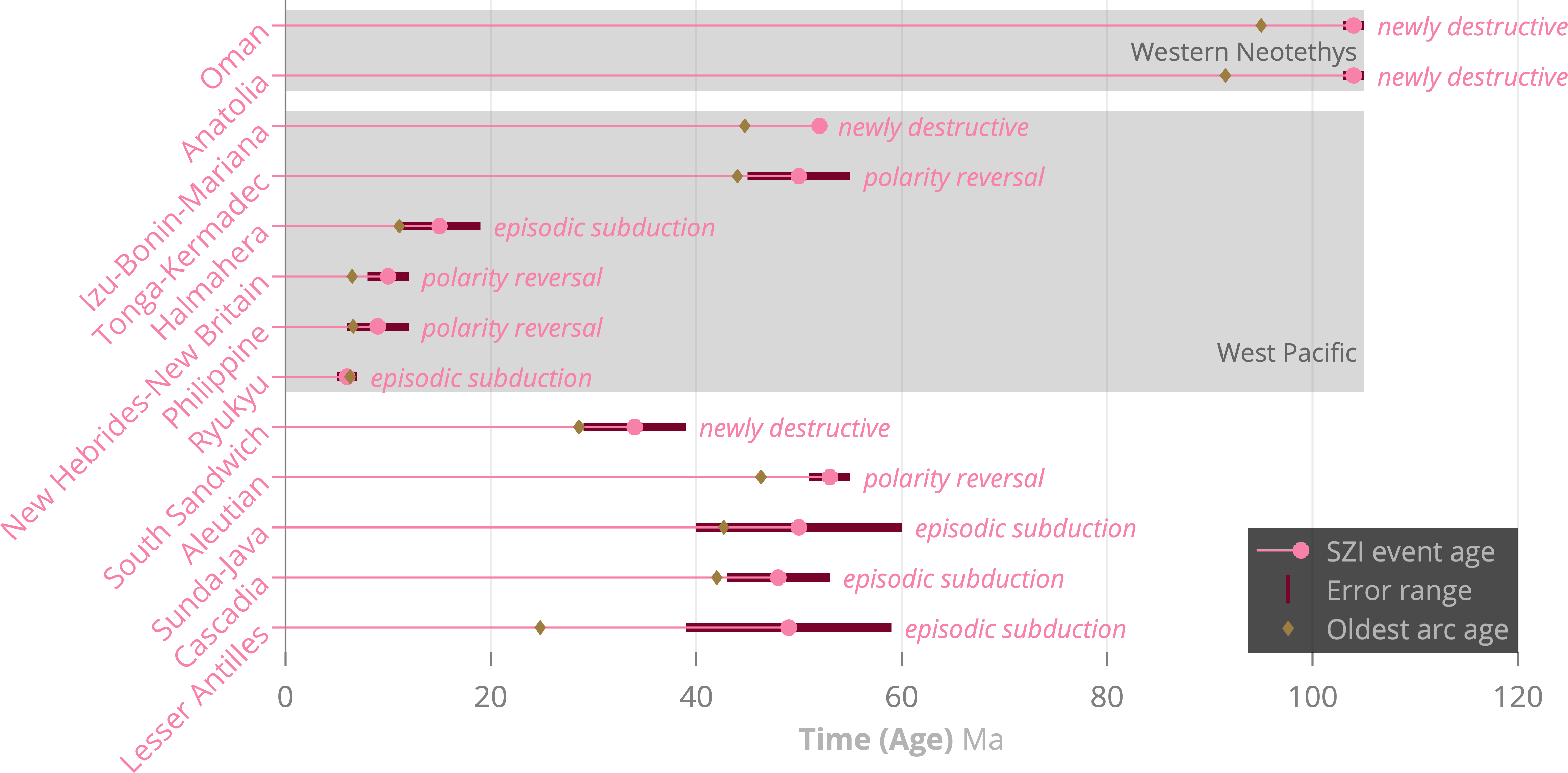
During the last hundred Million years, SZI happened at least 13 times. The global occurrences of SZI during this time window fit into two time periods, 55–40 Ma and 16–6 Ma, of apparently higher SZI activity on the Earth. The reason for this apparent temporal clustering is not entirely clear yet.
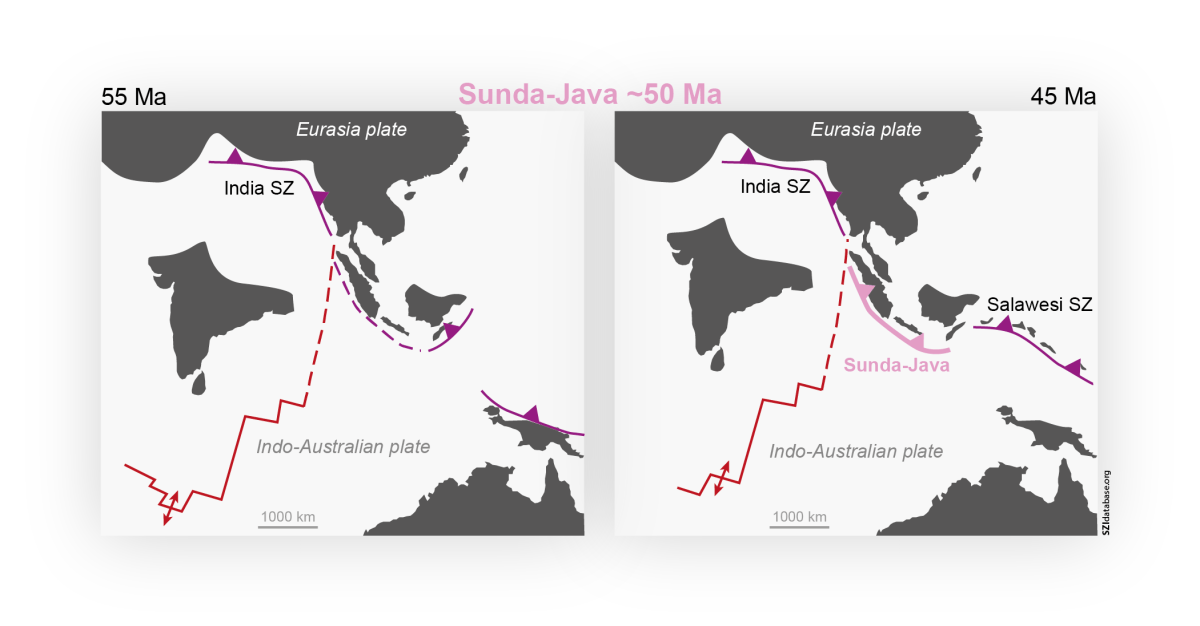
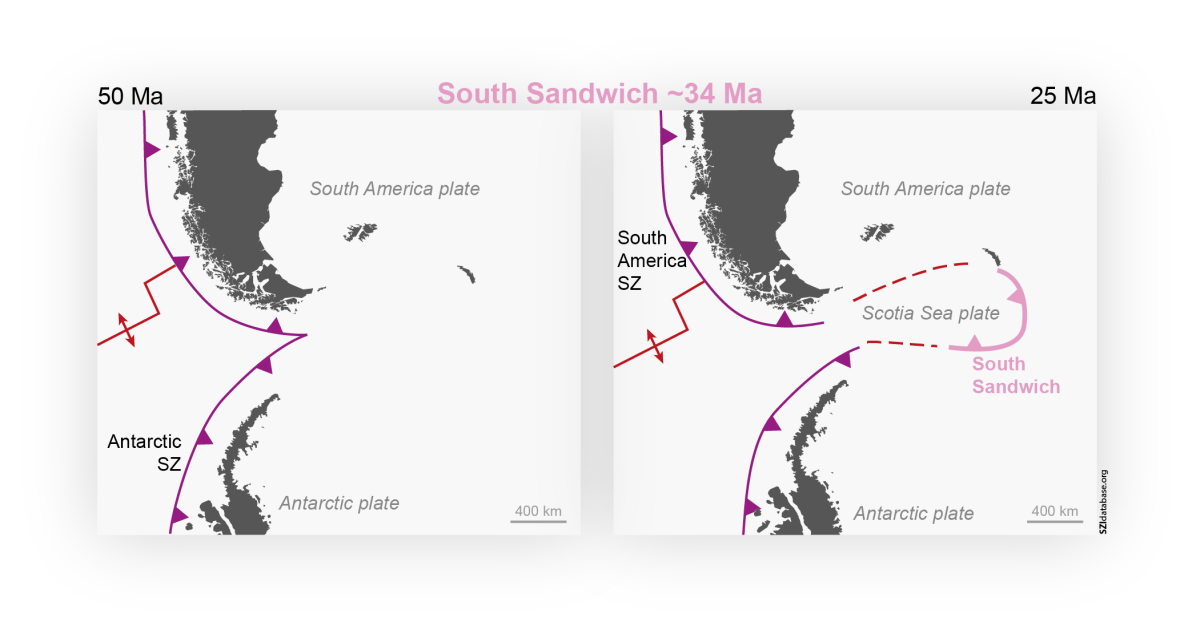
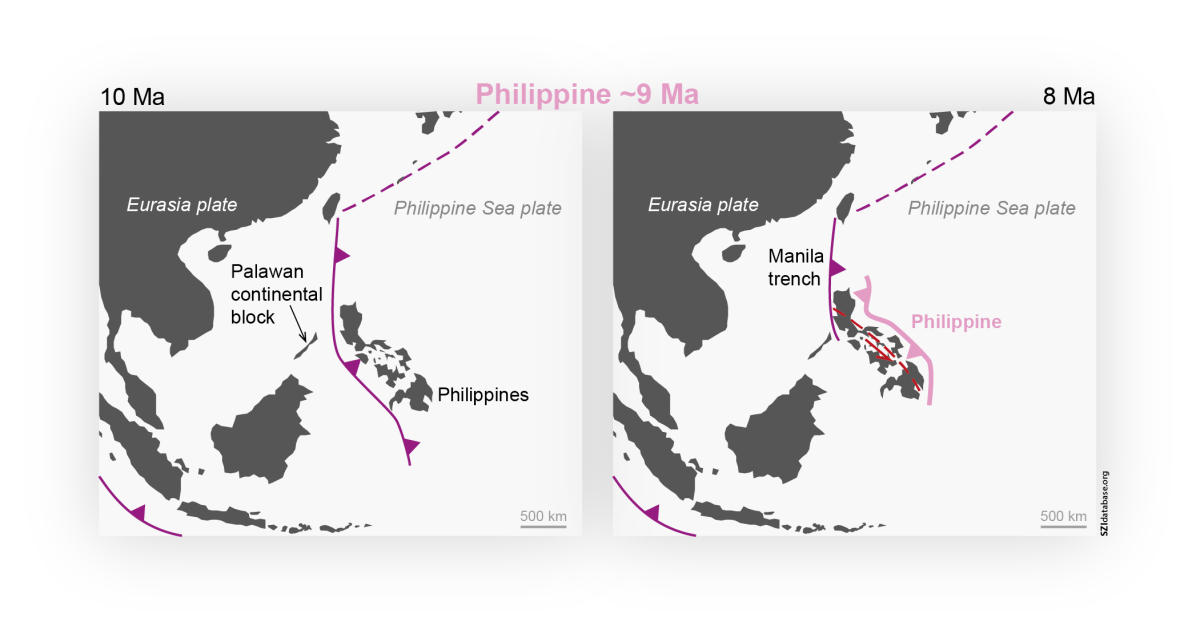
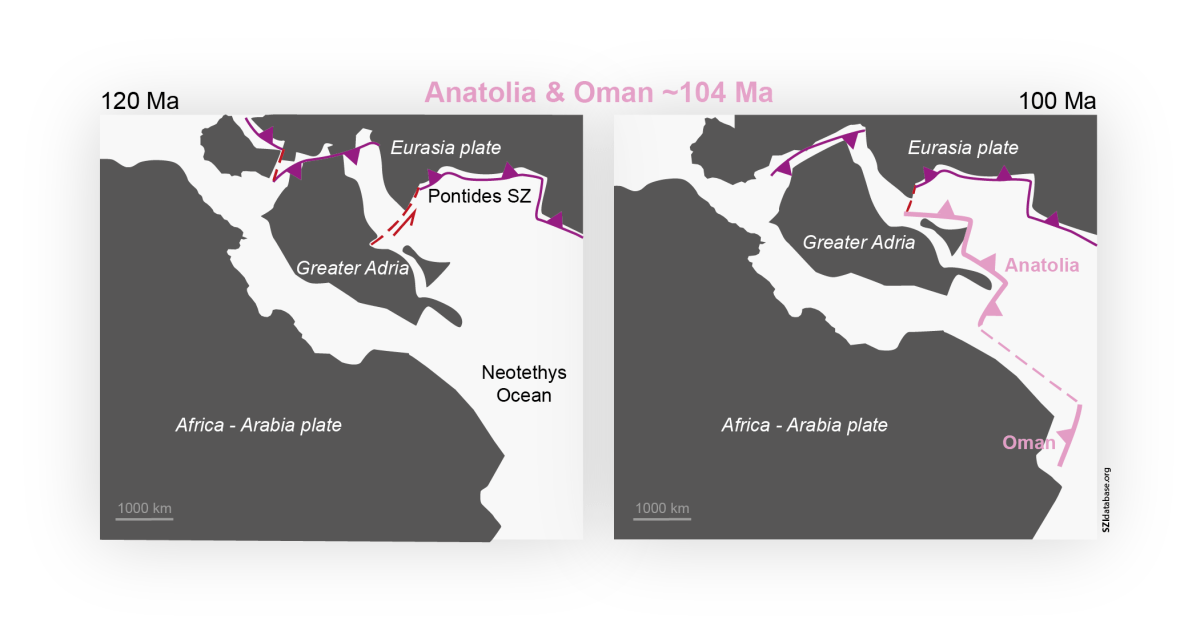
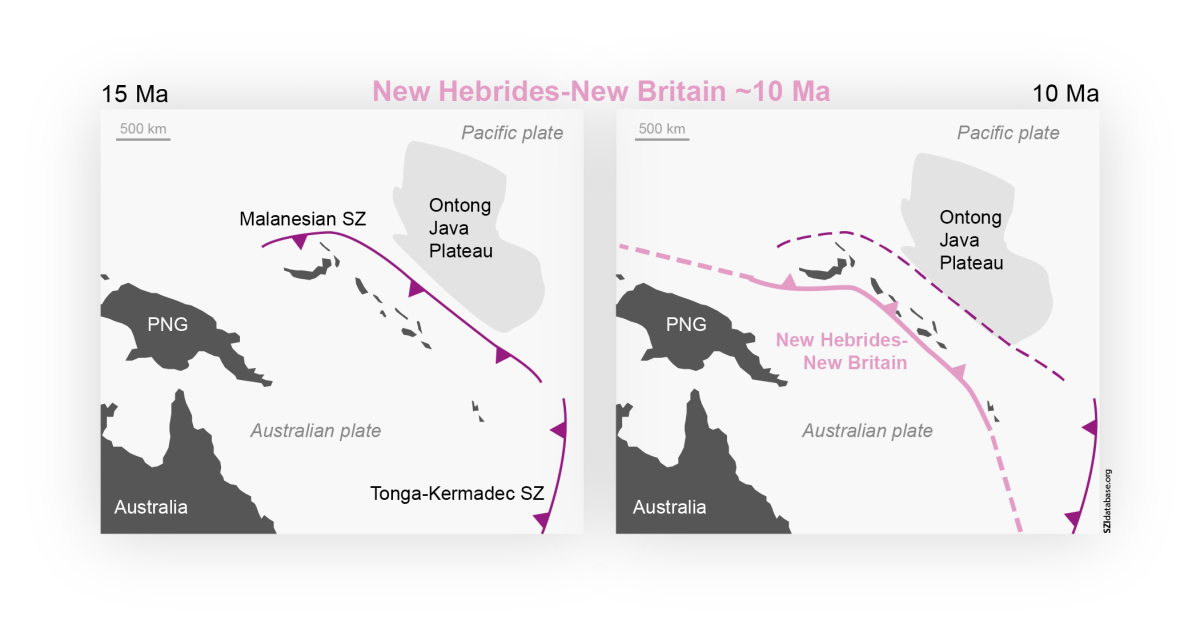
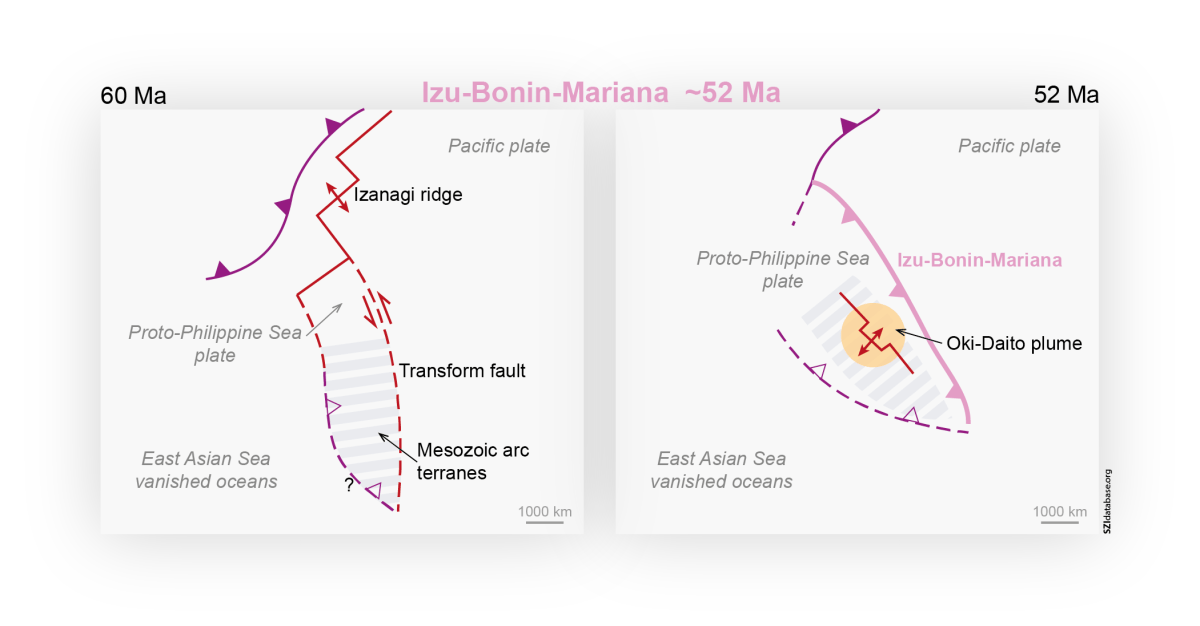
Some of the SZI events that occurred in the last 105 Million years are identified in the SZI database version 1.0 and indicated in terms of their individual timing and uncertainty estimate, as well as the corresponding oldest known volcanic arc age, and reconstructed SZI type. Figure from Crameri et al. (2020, Nature Communications) and available in multiple formats from s-ink.org/subduction-zone-initiation-events.Where do new subduction zones initiate?
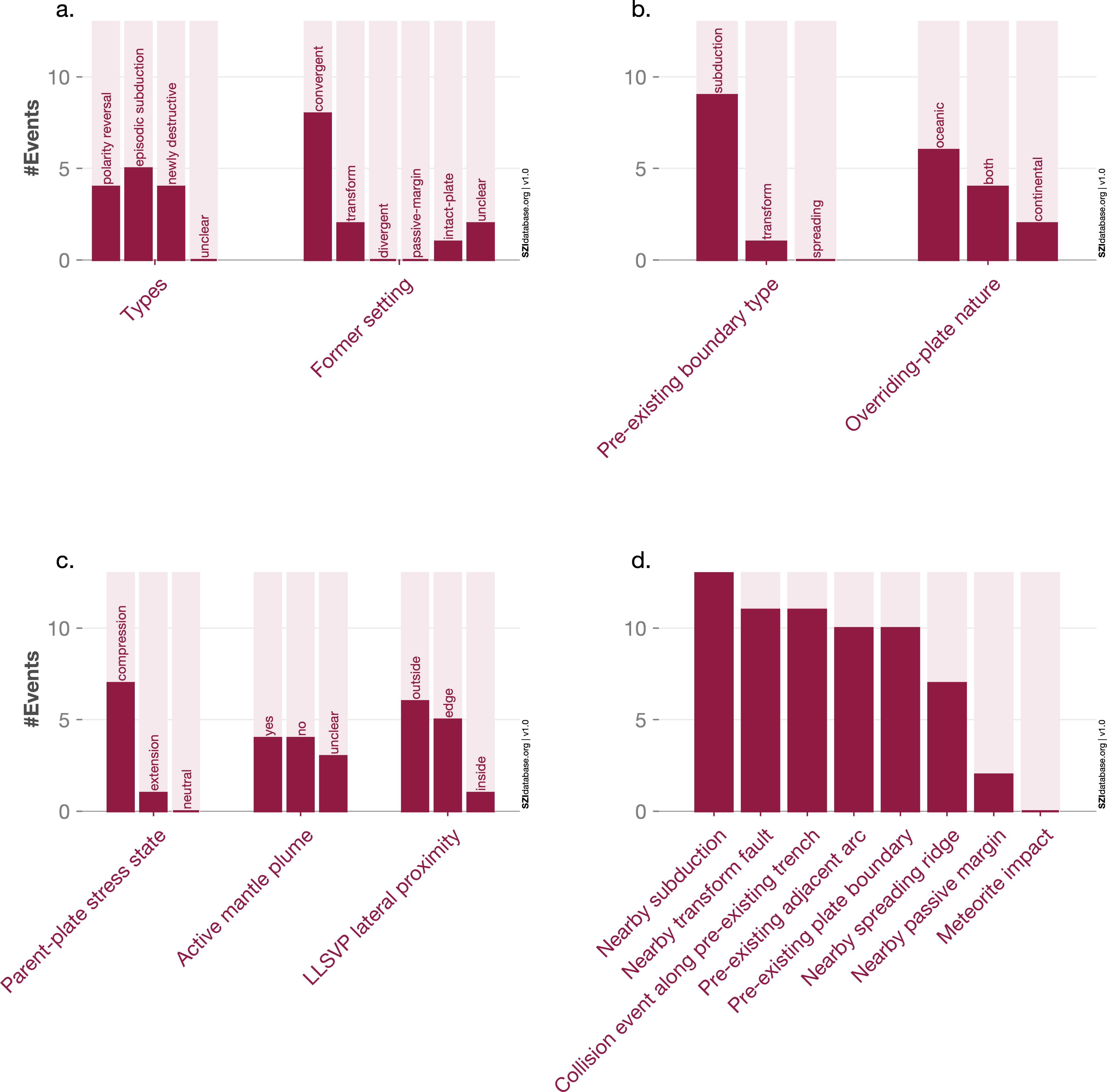
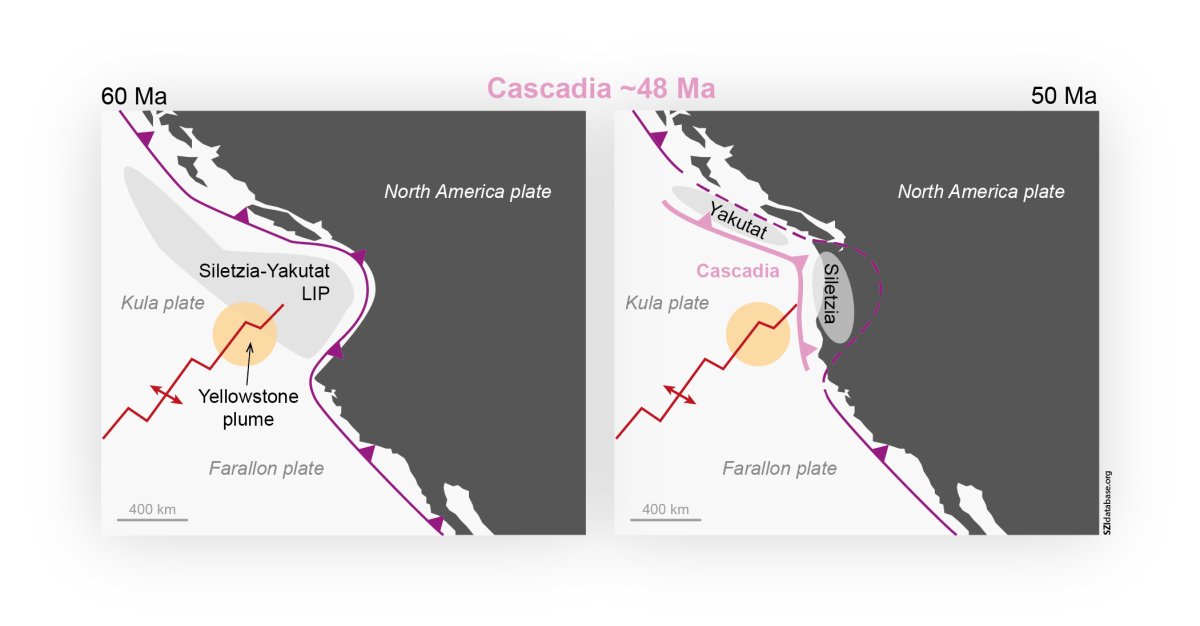
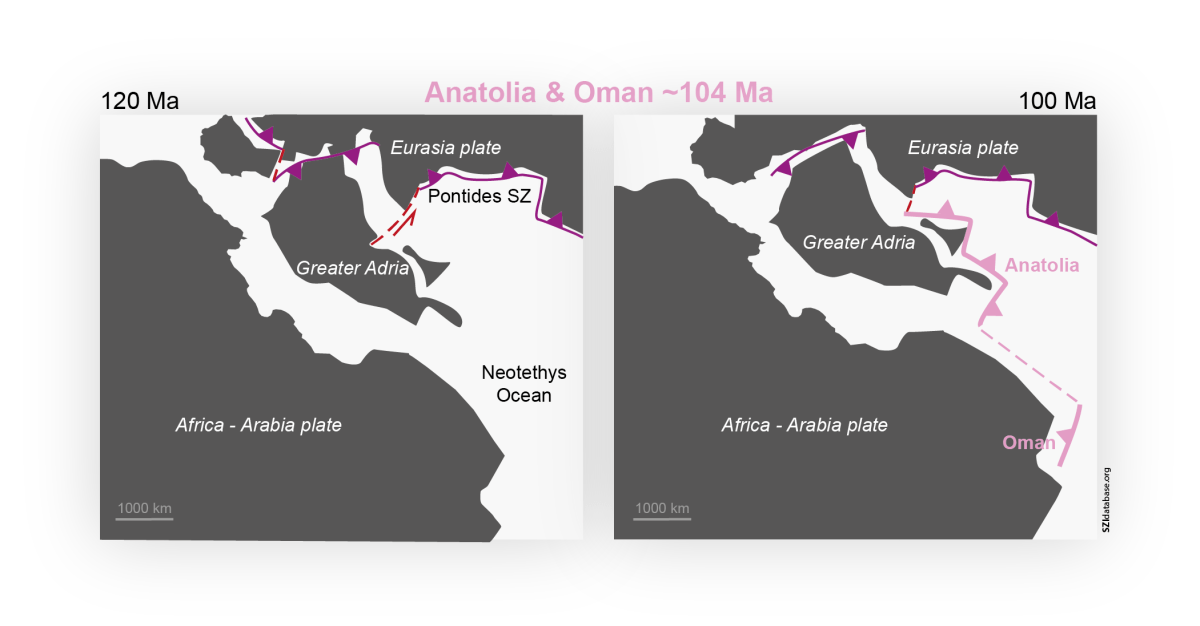
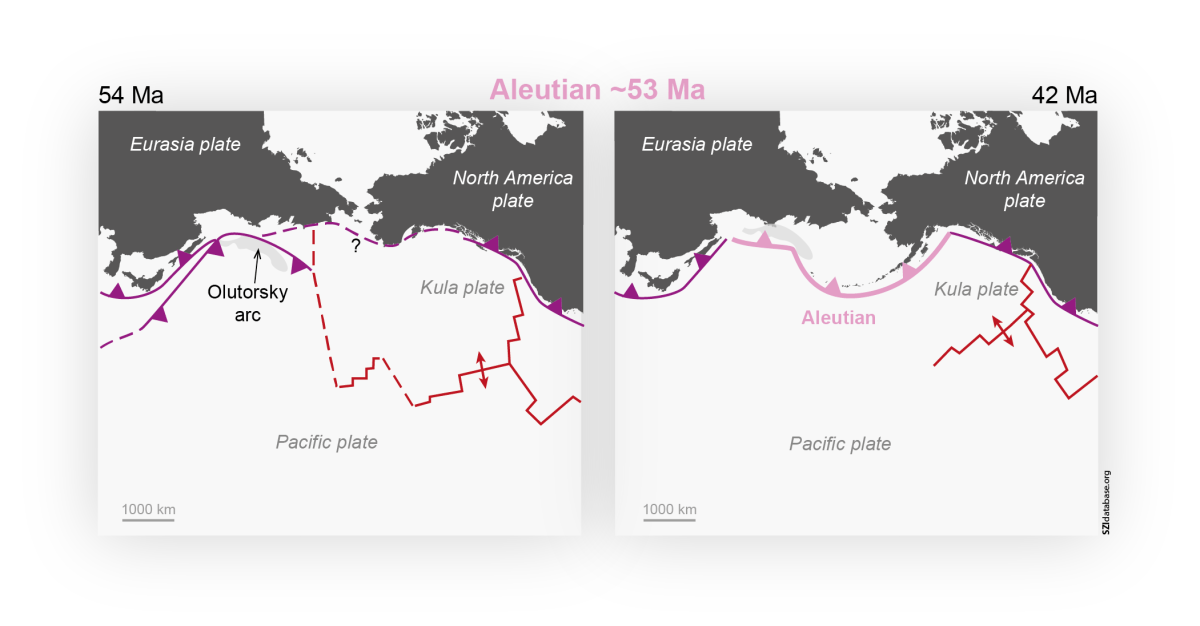
SZI during the last hundred Million years occured in diverse geographic and geodynamic settings. New subduction zones appeared across the globe and mostly, but not exclusively, in intra-oceanic settings. While the West Pacific realm has seen multiple SZI events, they were fewer in other areas around the globe.
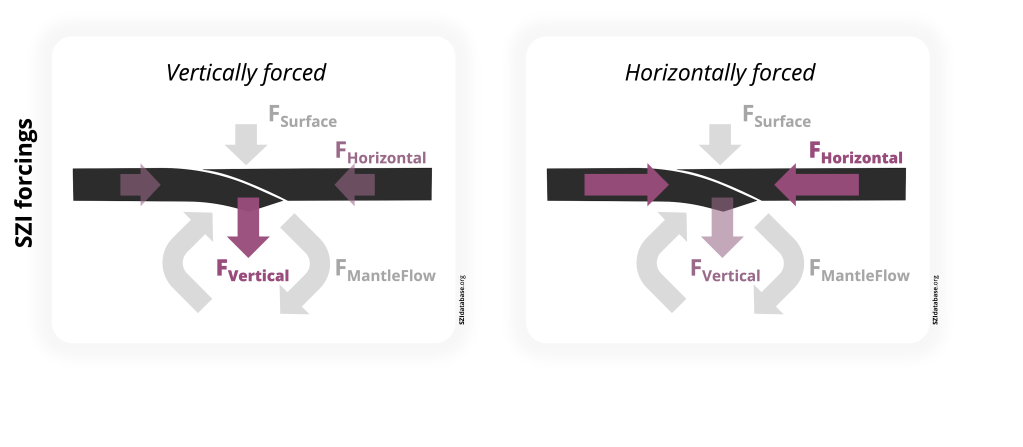
Quantitative SZI database analysis. The number of SZI events that fulfil specific aspects (light pink bars) versus the total number of SZI events diagnosed (dark grey bars; indicating a total of 13 SZI events). a,b,c The distribution of all SZI events into the different SZI types and former plate settings, and various other distinctive tectonic and mantle dynamic properties. d Total numbers of SZI events representing a given Earth-system characteristic. ‘Nearby’: within a 1500 km radius. Figure from Crameri et al. (2020, Nature Communications) and available in multiple formats from s-ink.org/subduction-zone-initiation-statistics.How does the initiation of new subduction zones work?The two SZI forcing endmembers, Vertically forced (left), with the dominant vertical forcing (i.e., some combination of plate buoyancy force, the force from any surface load, and vertical mantle-flow force), andHorizontally forced (right), with a dominant horizontal forcing (i.e., some combination of tectonic force and horizontal mantle-flow force). Even though some forces might be dominant, they are always accompanied by other forces. Figure from Crameri et al. (2020, Nature Communications) and available in multiple formats from s-ink.org/subduction-initiation-forcing.
The compilation of SZI events that occurred in the last ~100 Ma suggest that:
Purely plate-buoyancy driven (i.e., spontaneous) SZI is unlikely on the present-day Earth and, in the last 100 Ma.
SZI seems to necessitate heterogeneities in plate-strength like a plate boundary or a fracture zone. However, SZI at passive margins seems rare.
Both mantle upwelling and downwelling could play a significant role in fostering SZI.
Heterogeneous oceanic plate interiors seem more favourable for SZI than ocean-continent boundaries.
Collision of buoyant features with pre-existing subduction trenches is often a precursor of SZI events.
Subduction seems to breed subduction.
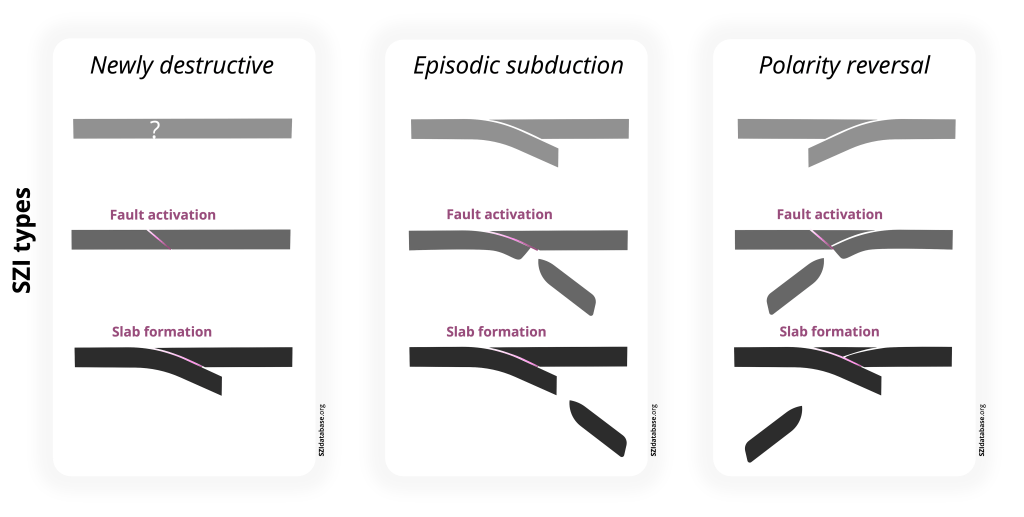
Three subduction zone initiation types can be distinguished in the current database, Newly destructive (left), a subduction fault establishing from an intact plate portion or some sort of non-subduction related plate weakness, Episodic subduction (middle), a subduction fault establishing at the same location following a previous, yet terminated subduction zone with the same polarity, and Polarity reversal (right), the formation of a new subduction fault with opposite polarity to the fault of the pre-existing, terminating subduction zone. Figure from Crameri et al. (2020, Nature Communications) and available in multiple formats from s-ink.org/subduction-zone-initiation-types.




 SZI Database